Sony Ericsson T610: A Design Classic
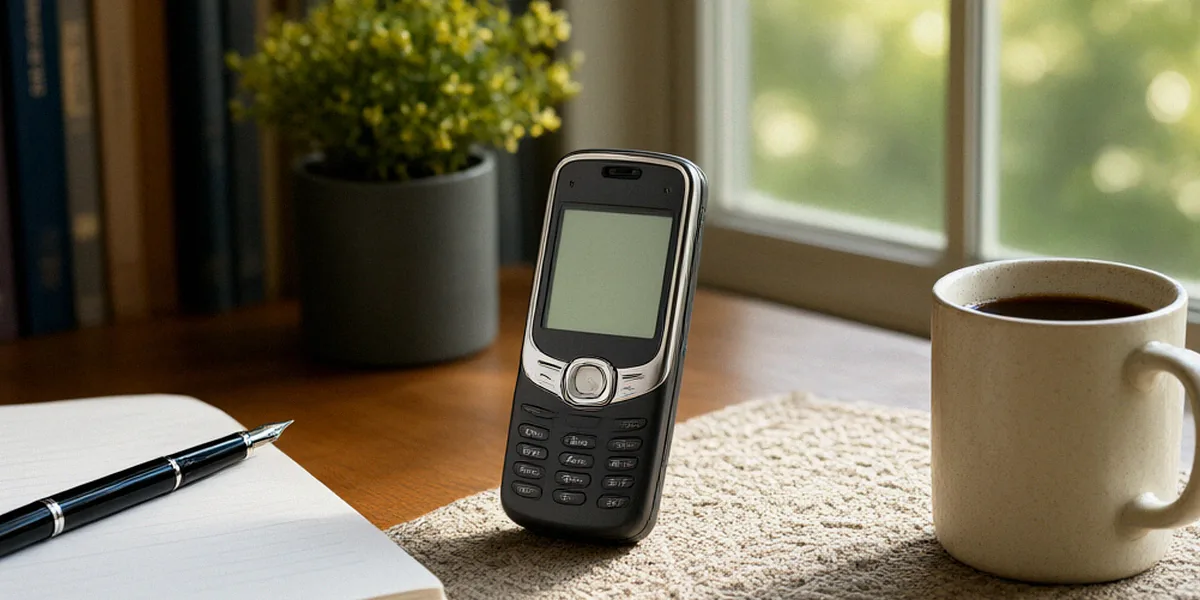
We still remember the first time we slid a T610 out of its box. It was 2003, the phone was wrapped in that familiar Sony Ericsson packaging, and the handset itself looked like nothing else on the shelf — a slab of brushed aluminium with a screen that seemed to glow. After years of chunky Nokias and plasticky Motorolas, here was a phone that felt like a piece of industrial design rather than a communications tool. More than two decades later, our team still thinks it’s one of the most beautiful handsets ever made, and the retro mobile community clearly agrees.
The T610’s Design Legacy
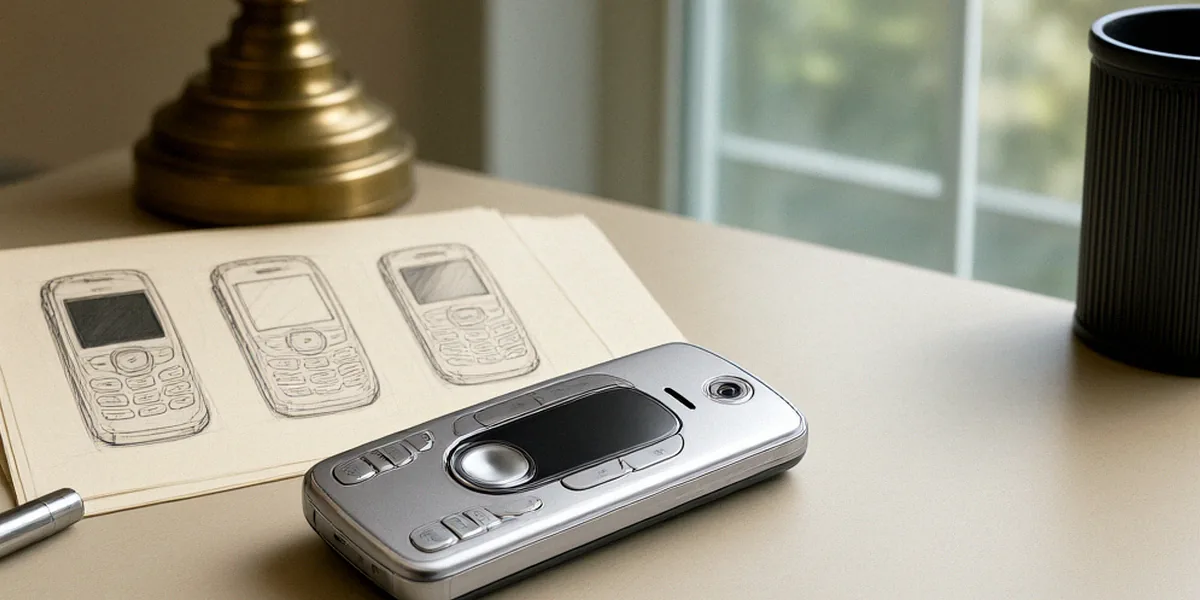
When the Sony Ericsson T610 launched in 2003, it arrived at a moment when Nokia still dominated the UK high street. Walk into any Carphone Warehouse or Phones 4u and the shelves were stacked with 3310s, 3410s and 3510s. The T610 cut through that with a completely different visual language — restrained, grown-up and quietly confident. UK networks like Vodafone and Orange carried it prominently, and it quickly became the phone to be seen with if you wanted to look like you knew something about design.
Sculpted for the Pocket
The candybar shape was deliberately minimal. There were no fake chrome accents or oversized buttons; just a slim 102 x 44 x 17mm body, a subtle screen bezel and a keypad that felt engineered rather than moulded. The aluminium face resisted fingerprints and the whole thing disappeared into a jeans pocket without a bulge. We’d argue that this restraint is exactly why the T610 has aged so well — it looks like a piece of Braun hardware, not a gadget from the era of nu-metal and frosted lip gloss.
The Screen That Changed Everything
The headline feature was the 65k colour screen. That may sound quaint now, but in 2003 most UK users were still squinting at 4096-colour or even monochrome displays. The T610’s STN panel rendered wallpapers, photo caller ID and menu icons with a richness that felt genuinely new. Combined with 2G connectivity and a compact joystick for navigation, it gave the handset a user experience that felt a generation ahead of its price bracket.
Themes and Customisation Culture
Themes were arguably the T610’s secret weapon. Sony Ericsson shipped the phone with a handful of preset looks, but the real magic was that users could download and install their own. Wallpapers, menu icons, colour schemes and even the standby clock could all be swapped. For a generation of UK teenagers who had previously been stuck with whatever the manufacturer decided, this was a revelation.
Downloading Themes in the Dial-Up Era
Getting a theme onto a T610 in 2003 was a small project. You either paid for one via WAP over GPRS, or — more commonly for our team — you downloaded a .thm file on a home PC, connected the phone with a serial or USB cable, and pushed it across with the bundled Sony Ericsson software. If you were lucky enough to have a Bluetooth dongle, you could beam themes to friends in the school canteen. Every transfer felt like a small victory.
The Rise of Fan-Made Theme Communities
Fan sites sprang up almost immediately. Forums like Esato and various UK-hosted message boards became hubs where users shared theme packs, icon sets and tutorials. Some creators built entire themed universes — Matrix-style green-on-black, football club colours, anime tributes. This was the beginning of the mobile customisation culture that would later explode with smartphones, and the T610 was one of the phones that made it mainstream.
Ringtones and the Sound of Nostalgia
Ask anyone who owned a T610 what they remember most and they’ll usually mention the ringtones. Polyphonic sound was a huge selling point in 2003, and Sony Ericsson leaned into it hard. Instead of the tinny monophonic beeps that Nokia owners were used to, the T610 could play multi-instrument arrangements that almost sounded like real music.
Polyphonic Power
The phone’s polyphonic engine supported 32 voices, which meant proper chords, basslines and percussion. UK users traded ringtones via Bluetooth, WAP portals and infrared, and a whole cottage industry of paid ringtone downloads grew up around it. At 3 or 4 pounds a pop, it was a genuine money-spinner for networks like Vodafone, Orange and O2.
From Composer to Chart Hits
For the more ambitious, the T610 included a composer tool that let you build your own melodies note by note. We spent hours punching in approximations of chart hits — usually badly — and beaming them to friends. It was fiddly, it was slow, and it was brilliant. That composer tool is one of the reasons the T610 still feels personal in a way modern phones don’t.
Why the T610 Still Matters to Retro Mobile Fans
The T610’s influence inside Sony Ericsson was enormous. The design language it established — clean lines, aluminium finishes, thoughtful keypads — carried through to later classics like the K750i, the W800i and the K800i. Without the T610 proving that a design-led phone could sell in volume, those models might never have existed. That lineage alone justifies its place in any retro mobile collection.
Collecting in the UK Today
Demand for good-condition T610s has quietly risen over the past few years. Working examples with original boxes, chargers and manuals fetch noticeably more than loose handsets, and the aluminium-faced variants are particularly sought after. If you’re starting a collection, here’s what we’d prioritise:
- Check the screen for dead pixels — 65k STN panels are prone to ageing
- Test the joystick, as these wear out faster than the keypad
- Confirm the battery holds any charge at all before buying
- Look for the original charger and, ideally, the box and manual
- Verify the network lock status if you plan to use a modern SIM
The T610’s Afterlife in Pop Culture
The T610 has popped up in films, TV shows and music videos set in the early 2000s, and it’s frequently referenced in retro-tech YouTube channels and design blogs. Its silhouette has become shorthand for “the mid-2000s” in the same way the Nokia 3310 represents the turn of the millennium. That’s a genuine cultural legacy for a phone that most people assumed would be forgotten.
Using a T610 in 2025: What to Expect
We’ll be honest: daily-driving a T610 in 2025 is a hobby, not a practical choice. But it’s a rewarding one if you go in with the right expectations. Calls and SMS still work on 2G where coverage exists, and the tactile experience of the keypad is genuinely satisfying. Just don’t expect to check your email on it.
Battery and Charging Realities
Original batteries are now over twenty years old and almost all of them are tired. A fresh aftermarket cell will typically give you two to three days of light use, but quality varies wildly. The proprietary charging connector is another hurdle — you’ll need to source a compatible charger, and the contacts can corrode if the phone has been stored poorly. We’d recommend buying a spare battery and charger before committing to using one regularly.
Network Compatibility and Workarounds
The bigger issue in the UK is 2G shutdown. EE has already begun retiring parts of its 2G network, and other operators are following. Vodafone and O2 still carry 2G for now, but that won’t last forever. If you want to keep a T610 usable, our suggestions are:
- Pick up a PAYG SIM from a network that still operates 2G in your area
- Test voice calls and SMS before relying on it for anything important
- Keep a modern phone as your primary — the T610 is a companion, not a replacement
- Consider a GSM gateway or VoIP bridge if you want to receive calls on the T610 at home
Frequently Asked Questions
When was the Sony Ericsson T610 released?
The T610 was released in 2003 and quickly became one of Sony Ericsson’s best-selling handsets in the UK.
Can I still use a T610 on UK networks today?
Yes, but only where 2G coverage remains. EE is phasing out 2G, while Vodafone and O2 still support it in many areas. Check local coverage before buying a SIM.
What made the T610’s screen special?
It featured a 65k colour display at a time when most rivals offered 4096 colours or monochrome. That jump made wallpapers, themes and photo caller ID look dramatically better.
Where can I find T610 themes and ringtones now?
Retro mobile forums, archived fan sites and enthusiast communities still host theme packs and polyphonic ringtones. You’ll usually need a cable or Bluetooth adapter to transfer them.
How does the T610 relate to later Sony Ericsson models?
Its design language directly influenced later classics like the K750i, which carried forward the minimalist aluminium aesthetic and the emphasis on customisation.
The Sony Ericsson T610 remains a touchstone for everything we love about retro mobile design. Its 65k screen, polyphonic ringtones and theme culture set the template for a decade of handsets, and its influence still echoes through today’s feature phones and minimalist revival devices. Whether you’re collecting, tinkering or just feeling nostalgic, the T610 earns its place in any retro mobile conversation.