Java Games We Loved: The Golden Age of Retro Mobile Gaming
We remember it vividly: the satisfying click of a tiny physical joystick, the slightly tinny chime of a custom ringtone, and the warm, low-res glow of a handheld screen illuminating a dreary tube carriage in 2003. For a generation of Brits, the humble feature phone wasn’t just a communication tool; it was a portal to a vibrant, addictive, and surprisingly deep gaming world. We are diving deep into the era of retro mobile phones, celebrating the brilliance of the Sony Ericsson T610 and the incredible library of games that defined our commutes.
The Dawn of Java on Feature Phones
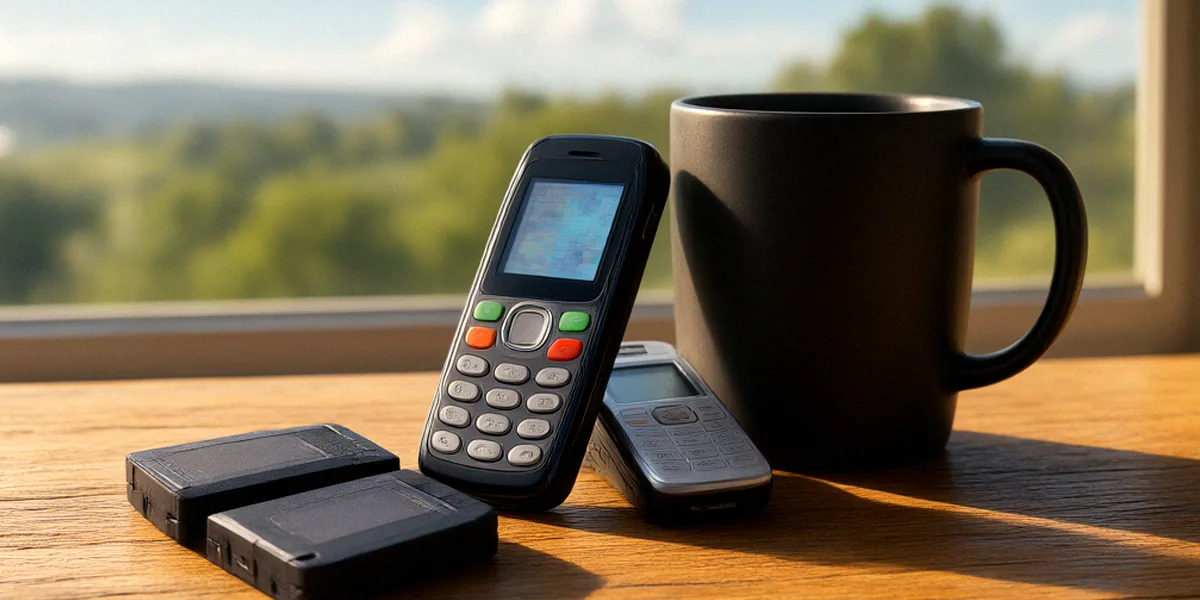
Before the sleek glass slabs and high-definition OLED displays of today, there was Java ME (J2ME). This standardized platform acted as the crucial bridge, transforming basic, utilitarian handsets into pocket-sized gaming consoles. In the competitive UK market, manufacturers like Nokia and Sony Ericsson fiercely battled to deliver the best mobile experiences. J2ME allowed developers to push the boundaries of what was possible on these constrained devices, turning simple handsets into surprisingly capable gaming machines.
From Snake to Space Impact: Early Pre-Java Icons
Even before Java truly took off, we had classics. Simple games like Snake provided the foundational challenge, while early titles showcased the potential for more complex interactions on these nascent screens. These early hits taught us the core mechanics of mobile gaming—simple controls, instant gratification, and addictive replayability.
How Java ME Changed Everything for Mobile Gaming
Java ME was the democratizing force. It allowed developers to target a massive, diverse installed base of feature phones. This accessibility meant that complex logic and engaging gameplay could reach millions of users, laying the groundwork for the entire mobile gaming industry we know today. It proved that powerful entertainment didn’t require a high-end smartphone.
Sony Ericsson T610: The Little Phone That Could Game
If we’re talking about the peak of this golden age, we have to talk about the Sony Ericsson T610. Released around 2003, this device wasn’t just another phone; it was a statement. It featured a vibrant 65k colour screen and a tactile joystick that felt perfect in the palm. For many of us, the T610 was the perfect marriage of reliable communication and genuine, high-quality mobile entertainment. It truly was the little phone that could game like a powerhouse.
The T610’s Joystick and Screen: A Gamer’s Best Friend
The combination of the T610’s hardware was what made the experience revolutionary. The physical joystick offered precision far superior to the rudimentary D-pads of older handsets, allowing us to navigate complex action games with ease. Paired with that stunning colour palette, the T610 brought a level of graphical fidelity to mobile gaming that felt genuinely advanced at the time.
Must-Play Java Titles on the T610
With its superior capabilities, the T610 could handle titles that pushed the limits of the J2ME standard. We remember sinking hours into:
- Action-packed adventures like Splinter Cell.
- High-stakes racing simulations like V-Rally.
- Complex puzzle games that tested our reflexes.
These weren’t just time-fill; they were genuine gaming experiences for the mobile platform.
The Games That Defined Our Commutes
Our daily lives were punctuated by the glow of our screens during crowded journeys. The Sony Ericsson T610 was often our companion on the London Underground or the Manchester Metrolink. These retro mobile phones were the primary source of entertainment during those long waits, and certain titles became cultural touchstones.
Puzzle Perfection: Block Breaker and Tetris
The classics never died, even in the Java era. We played Block Breaker and Tetris until our thumbs ached. These games represented the purest form of mobile gaming: simple rules, endless replayability, and a satisfying rush every time a line cleared.
Sports and Racing: Real Football and Asphalt
The sports genre was massive. Gameloft delivered incredible experiences that captured the spirit of the game. Gameloft’s Real Football, for instance, was a staple on UK feature phones. Similarly, the high-speed thrills of titles like Asphalt kept us glued to our devices, making those 20-minute stops feel like an eternity.
Ringtones, Themes, and the Culture of Customisation
Beyond the games, the culture surrounding these feature phones was vibrant. Customisation was huge, and it was intensely social. Having the right look and sound on your phone was a badge of status within your social circle. This led to an entire ecosystem of digital sharing.
The Ringtone Craze: From Crazy Frog to Composer
Ringtones were the ultimate form of self-expression. The mid-2000s saw the rise of specific, catchy tunes that became instant earworms across the UK. Polyphonic ringtones allowed us to move beyond simple beeps; we embraced the catchy, sometimes ridiculous, sounds of the era. Polyphonic ringtones like ‘Crazy Frog’ weren’t just background noise; they were a social marker.
Themes and Wallpapers: Personalising Your T610
The Sony Ericsson T610 was a canvas. Owners spent hours tweaking settings to achieve the perfect aesthetic. We would trade custom themes and wallpapers with friends, often using the phone’s built-in Infrared (IrDA) connectivity. This sharing mechanism was the original social media for mobile users.
Why These Java Games Still Matter Today
It’s easy to dismiss these experiences as relics, but we argue the opposite. The DNA of those early retro mobile phones is visible in everything that came after.
The Legacy of Java ME in Modern Mobile Gaming
The core lessons learned from J2ME—tight control, clever use of limited resources, and highly polished core loops—are the building blocks of modern mobile gaming. Before the massive, resource-hungry AAA titles, Java taught us how to make compelling experiences with constraints. This simplicity paved the way for the indie darlings and the streamlined mechanics of games like Angry Birds.
How to Relive Java Games on Emulators Today
Fortunately, the nostalgia doesn’t have to fade. We can still tap into this history. Modern emulation tools allow us to run these fantastic J2ME titles on modern operating systems. We encourage you to explore these archives to see how these Sony Ericsson T610 gems performed on newer hardware.
Conclusion
The era of the Sony Ericsson T610 and its incredible Java library was a unique period in digital history. It was a time when mobile gaming was raw, tactile, and deeply personal. We urge you to find one of those old handsets, dust it off, and charge it up. Replaying those classic Java gems isn’t just an act of nostalgia; it’s a vital reminder of the ingenious, simple, and brilliant way we started our digital journeys.
FAQ
What was the primary platform for mobile games in the early 2000s?
The dominant platform was Java ME (J2ME), which provided the framework for games running on various feature phones.
Was the Sony Ericsson T610 popular in the UK?
Yes, the Sony Ericsson T610 was a best-seller in the UK, highly regarded for its hardware and gaming capabilities.
How did users share custom content between phones like the T610?
Users commonly used Infrared (IrDA) technology to share custom themes, ringtones, and wallpapers with friends.
What kind of games were popular on feature phones?
Puzzle games like Block Breaker, sports simulations like Real Football, and action titles were among the most popular genres.