Can You Still Use a 2G Phone in the UK?
There are few sounds in mobile history as satisfying as the crisp, mechanical click of a Sony Ericsson T610 keypad. For many of us, that little joystick and brushed aluminium finish defined the early 2000s. But fast forward to today, and the question we get asked most often at myt610.net is simple: can you actually still use one of these retro mobile phones on a UK network? The short answer is yes — for now. The longer answer involves shrinking 2G coverage, network sunset dates, and a bit of forward planning. Let’s dig into what’s really happening with 2G in the UK and whether your beloved T610 still has a signal.
The State of 2G Networks in the UK
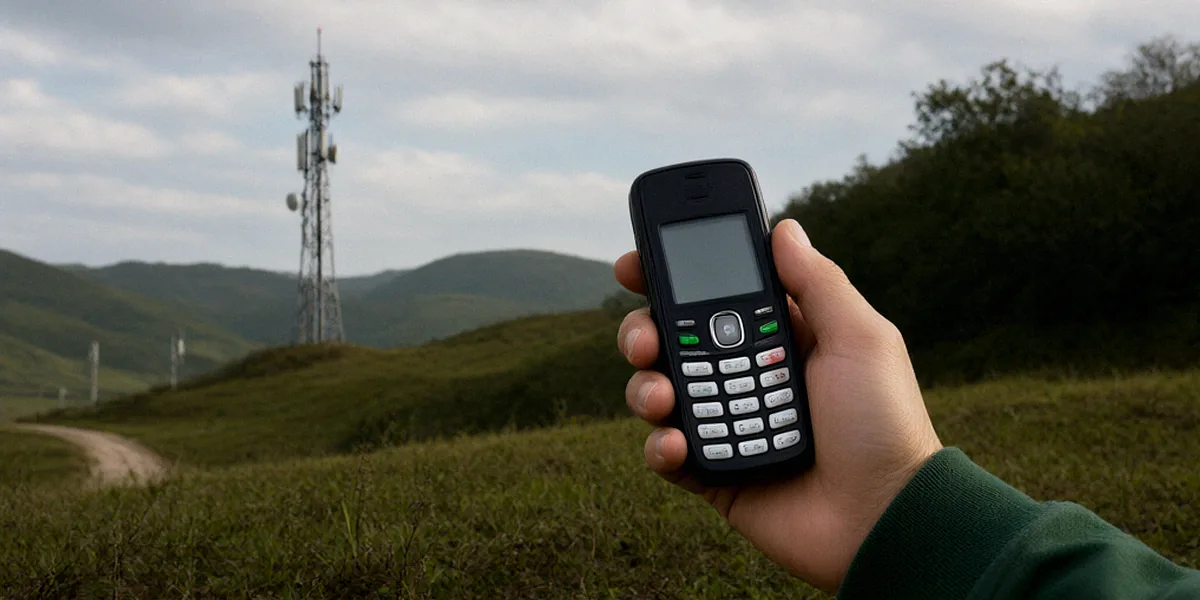
The UK’s four main mobile networks — EE, O2, Vodafone, and Three — are all at different stages of retiring their older infrastructure. 2G coverage is still available across much of the country, but it is shrinking year by year as operators refarm spectrum for 4G and 5G. Ofcom, the UK communications regulator, monitors coverage and spectrum usage, and it has been clear that legacy networks are living on borrowed time.
One important nuance: rural areas may retain 2G longer than cities. In remote parts of Scotland, Wales, and the South West, 2G is sometimes the only signal available, which is why regulators and operators have been cautious about a hard switch-off. For those of us who love feature phones, this is a small but welcome reprieve.
Which UK Networks Still Support 2G?
As things stand, 2G is still active on several UK networks, though the picture is changing fast:
- Vodafone — still running 2G for voice and SMS, with a planned retirement around 2030.
- O2 — maintains 2G for voice and SMS, though data services are being wound down.
- EE — 2G remains live but is being phased out, with a target of 2029.
- Three — historically the least 2G-friendly network, having focused on 3G and now 5G.
If you want the best chance of keeping a T610 connected, Vodafone and O2 are currently your safest bets for voice and text.
The 3G Shutdown and Its Impact on 2G
The UK’s 3G networks have already been switched off by most operators, and that matters for 2G users more than you might think. When 3G disappears, some traffic that used to fall back to 3G now lands on 2G — or fails entirely. It also signals the direction of travel: operators are consolidating legacy infrastructure, and 2G is next in line. The 3G shutdown was, in many ways, the opening act.
Will Your Sony Ericsson T610 Still Work?
Here’s the good news. The Sony Ericsson T610 supports GSM 900/1800 bands, which are exactly the frequencies UK 2G networks use. That means, in theory, your T610 can still make calls and send texts today — provided you have a compatible SIM and you’re in an area with 2G coverage.
We’ve tested ours recently on a Vodafone PAYG SIM and were able to place calls and send SMS without issue. The signal wasn’t as strong as it would have been in 2003, but it worked. For many of us, that’s enough.
SIM Card Compatibility and Activation
Modern SIM cards are generally backward compatible with 2G handsets, but there are caveats. A full-size SIM from a current PAYG plan will usually slot into a T610 with an adapter, and activation is straightforward. The trick is choosing a network that still maintains 2G voice services — Vodafone and O2 are the current frontrunners. Avoid any SIM tied to a plan that has already migrated fully to 4G/5G-only provisioning.
Call and Text Quality on 2G Today
Voice quality on 2G is perfectly usable for calls, though it lacks the HD voice you’d get on 4G. Texts arrive reliably. What you won’t get is reliable data — but more on that below. In our experience, a T610 on 2G feels remarkably close to how it did two decades ago, just with fewer bars in more places.
What About Data, Themes, and Ringtones?
This is where nostalgia meets reality. GPRS data on 2G is extremely slow — we’re talking kilobytes per second, not megabytes. Modern web browsing is out of the question. But basic WAP still functions on some networks, which means the door isn’t completely closed on downloading content to your T610.
WAP sites themselves are mostly defunct, but a handful of retro forums and archives still host T610 themes and polyphonic ringtones. It’s a scavenger hunt, but a rewarding one.
Downloading Ringtones via WAP or Bluetooth
There are two realistic routes to getting ringtones onto a T610 today:
- WAP download — if you can find a live WAP portal hosting .mid or .imy files, you can download them directly over 2G. Slow, but authentic.
- Bluetooth transfer — pair your T610 with a modern PC or phone and send files across. This is by far the easier method in 2025.
We’ve had good luck with Bluetooth for both ringtones and themes, and it avoids the pain of GPRS entirely.
Finding and Installing Phone Themes
T610 themes use the .thm format, and a few dedicated retro communities still archive them. Once you’ve got a file, transferring it via Bluetooth and applying it through the phone’s settings menu is quick. The result — a custom wallpaper, colour scheme, and icon set — is exactly the kind of personalisation that made feature phones so much fun.
The Future of 2G in the UK
The writing is on the wall. Vodafone plans to switch off 2G by 2030, while EE aims for 2029. O2 has targeted 2025 for retiring parts of its 2G data services, though voice services may continue past that date. Ofcom expects full 2G closure across the UK by 2033 at the latest.
That gives retro mobile phone fans somewhere between a few years and a decade of usable life — depending on network and location.
When Will 2G Be Switched Off?
Here’s a rough timeline to keep in mind:
- O2 — data services winding down from 2025, voice likely to continue longer.
- EE — full 2G retirement targeted for 2029.
- Vodafone — 2G switch-off planned for 2030.
- Ofcom — expects complete UK 2G closure by 2033.
What It Means for Feature Phones
For owners of feature phones and retro handsets, this means the clock is ticking. If you rely on a T610 as a daily driver, now is the time to enjoy it — and to plan a fallback for when the signal finally disappears.
How to Keep Your Retro Phone Alive
If you’re determined to keep using your T610, a few practical steps will help you get the most out of it while 2G is still around.
Choosing the Right SIM and Tariff
Pick a PAYG SIM from a network with confirmed 2G voice support — Vodafone and O2 are the current best options. Keep the SIM active with occasional top-ups, and test calls and texts regularly so you know your coverage situation.
Alternatives for When 2G Ends
When the 2G sunset finally arrives, there are still ways to enjoy your retro phone:
- Use it as an alarm clock or offline games device — Snake, anyone?
- Set up a GSM gateway at home for local calls.
- Keep it as a display piece or collector’s item.
- Pair it with a Bluetooth adapter for music playback from local files.
FAQ
Can I still make calls on a Sony Ericsson T610 in the UK?
Yes, as long as you have a compatible SIM from a network that still operates 2G voice services — Vodafone and O2 are currently the most reliable choices.
Does the T610 support UK 2G frequencies?
Yes. The Sony Ericsson T610 supports GSM 900/1800 bands, which are the frequencies UK 2G networks use.
Can I download themes and ringtones on a T610 today?
Yes, but it’s tricky. GPRS data is very slow, and most WAP sites are gone. Bluetooth transfer from a modern device is the easiest route.
When will 2G be switched off in the UK?
Vodafone plans to retire 2G by 2030, EE by 2029, and Ofcom expects full closure by 2033 at the latest.
Is it worth using a retro mobile phone in 2025?
Absolutely — for nostalgia, simplicity, and the sheer joy of that T610 keypad click. Just be aware that 2G coverage is shrinking and plan accordingly.
While 2G is undeniably on borrowed time, there’s still real joy in using a Sony Ericsson T610 today. Whether you’re sending a text, downloading a ringtone over Bluetooth, or just enjoying that satisfying keypad click, the experience is worth preserving. We’d love to hear your own retro mobile stories — drop us a line and share the nostalgia.