Custom Themes and Ringtones: The 2000s Phone Scene
We still remember the ritual clearly: sitting in a school corridor, thumb hovering over a tiny joystick, waiting for a WAP page to load so we could grab a new polyphonic ringtone for a Sony Ericsson T610. It took an age, cost a fortune in data charges, and half the time the download failed. But when that tinny version of a chart hit finally burst out of the speaker, it felt like genuine magic. That was the early 2000s UK mobile scene in a nutshell — a time when your phone stopped being a grey brick and became a small, loud extension of your personality.
The Rise of Mobile Personalisation in the UK
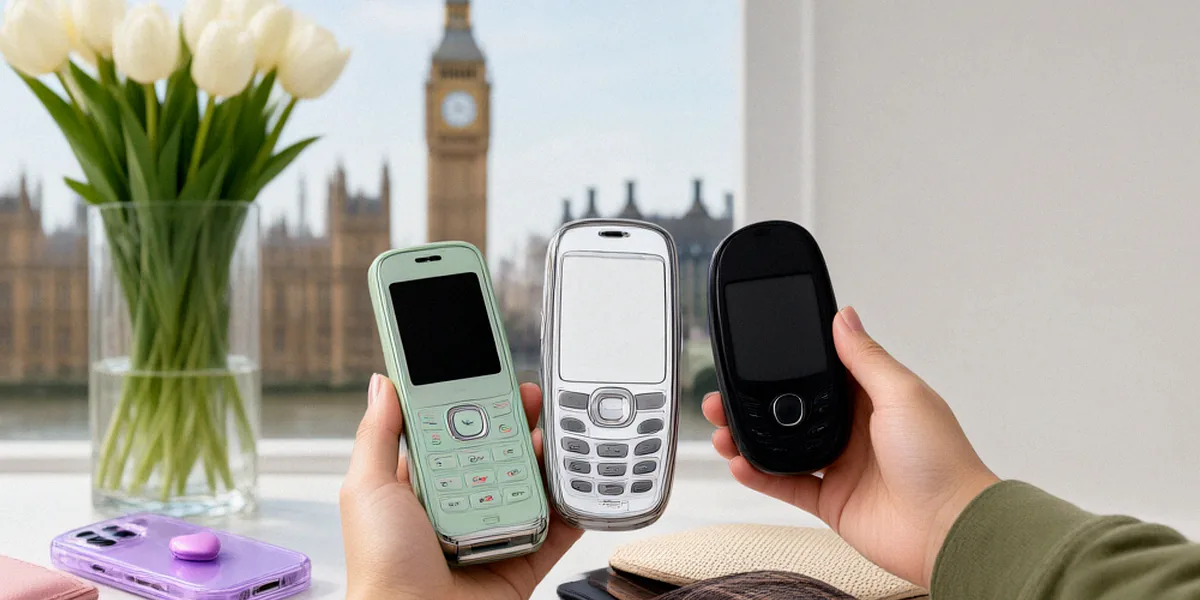
By the early 2000s, mobile phones had gone from business tools to everyday essentials. Pay-as-you-go SIMs made handsets affordable for teenagers, and with that came a very British obsession: making your phone look and sound like nobody else’s. Networks leaned into it hard, and personalisation became a genuine cultural marker in playgrounds, offices and bus queues across the country.
From Boring to Bold: Why Customisation Mattered
For most of the 1990s, a phone was a phone. Manufacturers shipped them with a handful of dull monophonic tones and a grey menu screen, and that was that. The shift came when colour screens and downloadable content arrived. Suddenly you could change your wallpaper, install a theme that altered the menus, icons and colours, and set a ringtone that announced your taste before you even answered.
Customisation mattered because it was one of the first ways digital identity went mobile. Your phone face said something about you — football fan, garage head, pop devotee or indie kid. In a pre-social-media era, a custom theme was a status symbol you carried in your pocket.
Key Networks and Their Role in the UK
UK operators drove the craze. Vodafone pushed its Live! portal, which bundled news, games and downloadable content into one walled garden. Orange, meanwhile, built a reputation for consumer-friendly extras, and its long-running Orange Wednesdays promotion — two-for-one cinema tickets for customers — became a staple of feature phone life, with users texting a short code to claim their deal.
Other networks joined in with their own portals and content stores, but the pattern was the same everywhere: operators acted as gatekeepers, charging premium rates for ringtones and themes, while manufacturers quietly opened the door to third-party downloads. That tension between closed portals and open downloads shaped the whole decade.
Sony Ericsson T610: The Canvas for Custom Themes
If one handset defined this era in the UK, it was the Sony Ericsson T610, released in 2003. It became one of the most popular phones in the country, and for good reason: a compact aluminium-effect body, a crisp colour screen, a built-in camera and Bluetooth support. Crucially, it was also a brilliant canvas for themes and ringtones.
Why the T610 Became a Customisation Icon
The T610’s theme system let you swap the entire look of the interface — background, highlight colours, menu icons and even the sound scheme. It supported downloadable content through Sony Ericsson’s own tools and third-party sites, and it handled polyphonic ringtones with genuine flair. Sites like Mobile9 and Zedge became go-to destinations for free Sony Ericsson themes and ringtones, with thousands of user-uploaded files sorted by model.
Because the T610 sold in such huge numbers, it built a massive community. If you had a T610, someone in your year group had already found a site with a theme that made the menus look like fire, chrome or a football pitch.
How to Create and Install Themes on the T610
Making a theme was a genuine hobby. The usual route looked something like this:
- Download Sony Ericsson’s theme creation software (or a compatible third-party editor) to a PC.
- Choose your background image, menu colours and icon set, keeping within the file size limits.
- Export the theme as a .thm file.
- Transfer it to the phone via the supplied cable, Bluetooth or infrared.
- Open the file on the handset and apply it from the settings menu.
Installing a downloaded theme was even simpler — send it over Bluetooth, accept the file, and it appeared in your themes list. The only real obstacles were memory limits and the cost of GPRS data if you grabbed files directly over WAP.
The Golden Age of Ringtones: From Monophonic to Polyphonic
Ringtones were the loudest, most profitable corner of the personalisation boom. The UK ringtone market was enormous, and it produced some genuinely strange pop-culture moments.
Monophonic Beginnings and Nokia Tunes
Early handsets played monophonic tones — one note at a time. Nokia turned this limitation into a feature with its Composer, letting users punch in their own melodies using a grid of numbers and letters. The infamous Nokia tune became one of the most recognised pieces of music on the planet, and a whole culture of sharing hand-typed compositions grew around it.
Polyphonic Breakthrough and the Crazy Frog Phenomenon
Polyphonic ringtones changed everything. Instead of a single beep, you got multiple simultaneous notes that could approximate a real song. Chart hits, TV themes and dance tracks were all fair game, and the ringtone charts started to influence the actual music charts.
The most famous example remains Crazy Frog. The animated character’s version of ‘Axel F’ topped the UK Singles Chart in 2005, a moment that perfectly captured how ringtones had crossed over from phone gimmick to mainstream pop. Love it or hate it, that frog was everywhere — and it existed because millions of us wanted a loud, silly tone on our feature phones.
Where We Got Our Themes and Ringtones
Before app stores, finding content was half the fun. UK users had a scrappy, slightly chaotic ecosystem of sources, and everyone had their favourite.
Magazines, WAP, and the Early Internet
Print magazines like Mobile Choice ran regular pages of ringtone and theme codes, wallpapers and game reviews. You’d find a code, text it to a short number, and wait for the download. WAP portals from the networks offered curated content, while early websites — Mobile9 and Zedge chief among them — hosted enormous free libraries. Forums and fan sites filled the gaps with tutorials and user-made themes.
Bluetooth and Infrared Sharing Culture
The most social route was person-to-person. Bluetooth and infrared were common ways to share ringtones and themes between friends in the UK, and the etiquette was strict: you’d pair, send, and hope the transfer didn’t fail halfway. Infrared required lining up the ports and holding still, which made it a slow but oddly satisfying process. Bluetooth was faster and soon became the default — a real-life file-sharing network powered entirely by friendship and proximity.
The Legacy of 2000s Phone Customisation
It’s tempting to treat the theme and ringtone craze as a footnote, but its influence runs straight through to the phones we use today.
From Feature Phones to Smartphones
Everything we now take for granted — wallpapers, custom icon packs, notification sounds, dark mode — started as a paid download on a feature phone. The idea that software should reflect personal taste was established in that era. Smartphone platforms simply industrialised it, replacing premium-rate text codes with app stores and, eventually, free open ecosystems.
Why We Still Love Retro Mobile Phones
There’s a reason collectors and enthusiasts keep coming back to handsets like the T610. They’re tactile, purposeful and finite. A feature phone did a handful of things well, and customising it felt like a creative act rather than a subscription decision. For many of us in the UK, these devices carry memories of a simpler, noisier, more personal mobile culture.
FAQ
What was the Sony Ericsson T610 and why is it so fondly remembered?
The Sony Ericsson T610 was released in 2003 and became one of the most popular phones in the UK. Its colour screen, camera, Bluetooth support and theme system made it a favourite for personalisation, and it built a huge community around downloadable themes and polyphonic ringtones.
Where did people download free Sony Ericsson themes and ringtones?
Sites like Mobile9 and Zedge were the most popular destinations, offering large libraries of user-uploaded themes and ringtones sorted by handset model. Network WAP portals and magazine code pages were also common sources.
How did friends share ringtones and themes before apps?
Bluetooth and infrared were the main methods. You’d pair two phones, send the file directly, and accept it on the receiving handset. Infrared was slower and needed the ports aligned, while Bluetooth became the standard as more handsets supported it.
Did ringtones really affect the UK music charts?
Yes. Crazy Frog’s ‘Axel F’ ringtone topped the UK Singles Chart in 2005, showing how strongly the ringtone market had crossed into mainstream pop. Ringtones were a serious revenue stream for labels, artists and operators throughout the mid-2000s.
What role did UK networks play in mobile personalisation?
Networks like Vodafone and Orange ran content portals that sold ringtones, themes and games. Orange also introduced the ‘Orange Wednesdays’ promotion, which was hugely popular among feature phone users and helped keep customers engaged with their handsets.
The 2000s phone scene was never really about technology for its own sake. It was about creativity and identity — choosing a theme that matched your mood, hunting down a ringtone nobody else had, and swapping files with friends over Bluetooth in a car park. The Sony Ericsson T610 remains a beloved symbol of that era for UK enthusiasts, and here at myt610.net we’re happy to keep the nostalgia alive.