Sony Ericsson’s Greatest Hits: The Retro Mobile Phones That Defined an Era
If you were a teenager in Britain in the early 2000s, you probably remember it: the little rising jingle that played when a Sony Ericsson phone switched on, followed by the satisfying click of the joystick as you scrolled straight to your themes folder. There was a genuine thrill in downloading a new polyphonic ringtone over WAP, or hunting down a T610 theme that matched your mood that week. Long before app stores and endless customisation became standard, Sony Ericsson was quietly teaching a generation that a mobile phone could be personal. We started myt610.net because that feeling never really left us, and this is our tribute to the phones that started it all.
Why Sony Ericsson Still Matters to Retro Mobile Phone Fans
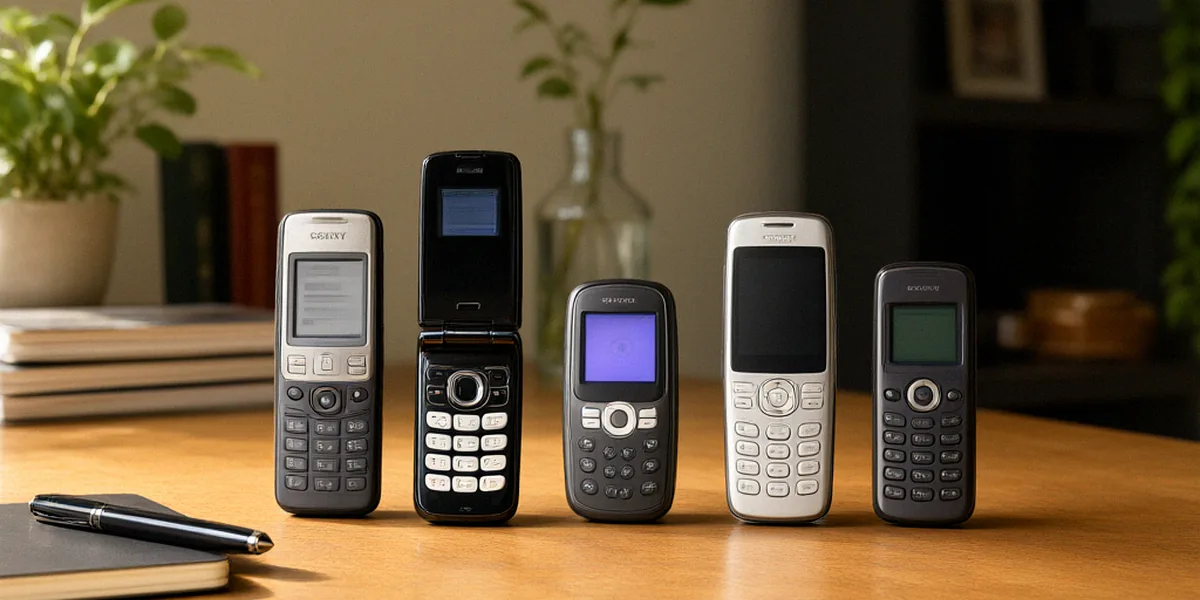
Sony Ericsson was a joint venture between Sony and Ericsson, active from 2001 to 2012, and for a huge chunk of that decade it was one of the most exciting names in mobile. It was a brand that managed to feel both engineering-led and playful, producing handsets that looked unlike anything else on the shelf. For those of us who grew up browsing high street phone shops, the logo still triggers something.
The Sony Ericsson Story: A Swedish-Japanese Alliance
The merger brought together Ericsson’s telecommunications know-how and Sony’s flair for consumer electronics, design and media. Swedish networks and Japanese walkmans in one device — that combination sounds odd on paper, but it produced phones with real character. Ericsson had already built a solid reputation for reliable handsets, while Sony understood how to make gadgets people desired. The result was a portfolio that swung from sensible business phones to swivel-screen oddballs, and we loved it for that range.
How UK Networks Made These Phones Icons
None of this would have mattered without the UK retail machine behind it. Orange and T-Mobile pushed Sony Ericsson handsets hard on contract, and Carphone Warehouse displays turned the T610, W800i and K800i into everyday sights on the high street. Pay-as-you-go deals meant teenagers could save up for a Sony Ericsson without a credit check, and that accessibility is a big reason the brand became woven into British youth culture. Network exclusives, upgrade offers and in-store demos all played their part in making these phones mainstream.
The T610: The Phone That Made Customisation Cool
If one handset deserves the credit for making personalisation a mainstream obsession, it is the Sony Ericsson T610. Launched in 2003, it arrived at exactly the right moment, when colour screens and downloadable content were shifting from novelty to norm. The T610 was small, aluminium-trimmed and genuinely handsome.
Design and Specs That Felt Ahead of Their Time
The T610 launched in 2003 with a 65k colour screen and Bluetooth, which felt genuinely futuristic to anyone upgrading from a monochrome brick. That screen made wallpapers, themes and colour menus actually worth having, while Bluetooth freed us from cables for the first time. The joystick navigation was divisive — some of us loved it, some of us wore it out — but it gave the phone a distinctive feel that no rival quite matched.
Themes, Ringtones and the Rise of Personalisation
What really set the T610 apart was the ecosystem around it. Themes changed not just the wallpaper but the colours, icons and menu styling, so your phone could look completely different from your mate’s. Polyphonic ringtones replaced tinny monophonic beeps with something approaching actual music. Community sites sprang up to host downloads, and we spent hours swapping files over infrared and Bluetooth. If you want a sense of what that culture looked like, our archive of T610 themes and ringtones is a good place to start.
Walkman and Cyber-shot Phones: Music and Camera Cred
Sony Ericsson’s next masterstroke was borrowing two of Sony’s most famous brands and bolting them onto mobile phones. It sounds obvious now, but at the time it was a bold move that reshaped what people expected from a feature phone.
W800i and the Walkman Phone Revolution
The W800i Walkman phone arrived in 2005 and popularised mobile music in the UK in a way no previous handset had managed. It shipped with decent earbuds, expandable memory and dedicated music controls, and it looked the part in orange and cream. Suddenly your phone could replace your MP3 player on the commute, and a lot of us did exactly that. The Walkman range that followed kept the momentum going for years.
K800i Cyber-shot: The Camera Phone Benchmark
The K800i Cyber-shot launched in 2006 with a 3.2-megapixel camera and xenon flash, and it changed what we expected from a phone camera. Xenon flash made night photos genuinely usable, and the lens cover sliding open felt like using a proper compact camera. For a lot of people, the K800i was the moment they stopped carrying a separate digital camera on nights out.
- T610 (2003): 65k colour screen, Bluetooth, customisation pioneer
- W800i (2005): Walkman branding, expandable memory, mobile music for the masses
- K800i (2006): 3.2-megapixel Cyber-shot camera with xenon flash
Cult Classics and Quirky Favourites
Sony Ericsson’s experimental streak produced some of the most memorable handsets of the era, even when they did not sell in huge numbers. These are the phones that collectors still chase today.
T68i and P800: Early Smartphone Ambition
The T68i was one of the first mass-market colour-screen phones and even starred in a Bond film, which tells you how cool it looked at the time. The P800 and P900 pushed things much further, running the UIQ interface with a touchscreen, stylus and a flip keypad. They were genuinely ambitious smartphones years before the term became common, and they hinted at where the whole industry was heading.
Z600, S700i and Other Oddballs We Adored
The Z600 was a chunky clamshell with interchangeable front covers that made it feel like a toy in the best way. The S700i went the other direction entirely, with a swivel design that turned the phone into a camcorder-style camera. Neither was a massive seller, but both showed a company willing to take risks. That willingness to be different is exactly what we miss most.
The Legacy: Themes, Ringtones and Lasting Nostalgia
Sony Ericsson may have closed its doors as a brand in 2012, but the culture it created never disappeared. Themes and polyphonic ringtones live on through collectors, forums and archive sites, and there is a thriving scene dedicated to keeping old handsets working.
Why We Still Hunt for Old Themes and Ringtones
There is something deeply satisfying about loading an original theme onto a working T610 and hearing that startup chime again. It is part nostalgia, part preservation. These files represent a moment when personalisation was hands-on and a bit fiddly, and the effort made it feel more meaningful. Retro mobile phone collectors keep that spirit alive, and we are proud to be part of it.
Sony Ericsson’s Influence on Modern Phone Design
Look at any modern smartphone and you can trace a line back to Sony Ericsson’s ideas: music-first handsets, camera-first handsets, customisable interfaces and design that tries to stand out. The Walkman and Cyber-shot experiments proved that people wanted their phone to be their camera and their music player, and the whole industry followed.
FAQ
When was Sony Ericsson founded and when did it end?
Sony Ericsson was a joint venture between Sony and Ericsson, active from 2001 to 2012. Sony eventually bought out Ericsson’s share and folded the brand into Sony Mobile.
What made the Sony Ericsson T610 so special?
The T610 launched in 2003 with a 65k colour screen and Bluetooth, but its real legacy was customisation. Themes and polyphonic ringtones turned personalisation into a mainstream hobby for UK phone owners.
Which Sony Ericsson phone popularised mobile music?
The W800i Walkman phone arrived in 2005 and popularised mobile music in the UK, thanks to expandable memory, dedicated music controls and decent bundled earphones.
Was the K800i really a camera phone benchmark?
Yes. The K800i Cyber-shot launched in 2006 with a 3.2-megapixel camera and xenon flash, which made it one of the first phones people trusted for proper photography.
Can I still download old Sony Ericsson themes and ringtones?
Absolutely. Archive sites and collector communities still host original themes and polyphonic ringtones, and many enthusiasts keep old handsets running specifically to use them.
Sony Ericsson’s greatest hits remain a high point of feature phone creativity and personalisation, a decade when a phone could genuinely reflect who you were. Whether you queued for a T610 on Orange, blasted music on a W800i or snapped blurry club photos on a K800i, those memories are worth keeping. We would love to hear your own — dig out your old handset, tell us which Sony Ericsson you loved most, and help keep the nostalgia alive.